Explore Pumps


Diaphragm Pumps vs Submersible Pumps

Diaphragm pumps (especially AODD) are positive displacement, great for viscous/abrasive/corrosive fluids, self-priming, and dry-run safe. Submersible pumps are centrifugal, best for clean/deep water but need submersion and priming in some cases.

Diaphragm Advantages Over Submersible
  • Handles solids/viscous/slurries better
  • Self-priming & dry-run capable
  • Explosion-proof (air-powered)
  • No electrical risk in hazardous areas
Submersible Advantages
  • Quieter & more efficient for clean water
  • Excellent for deep wells/high head
  • Lower energy use

Key Information (Click to Expand)

Applications →
  • Chemical transfer & dosing
  • Sludge, slurry & wastewater handling
  • Food & beverage (hygienic models)
  • Paints, inks & adhesives
  • Mining & construction dewatering
  • Filter press feeding
Advantages & Disadvantages →
Advantages
  • Self-priming & dry-run safe
  • Handles abrasive/corrosive/viscous fluids
  • No seals → leak-free
  • Explosion-proof (air-operated)
  • Easy maintenance
Disadvantages
  • Pulsating flow (can use dampeners)
  • Requires compressed air (higher operating cost)
  • Lower max pressure/flow vs centrifugal
  • Diaphragm wear over time

Types of Diaphragm Pumps

Most common — powered by compressed air, double diaphragms for reliable transfer.

Electrically driven for continuous duty & energy efficiency.

Submerged versions for specific dewatering or sump applications.

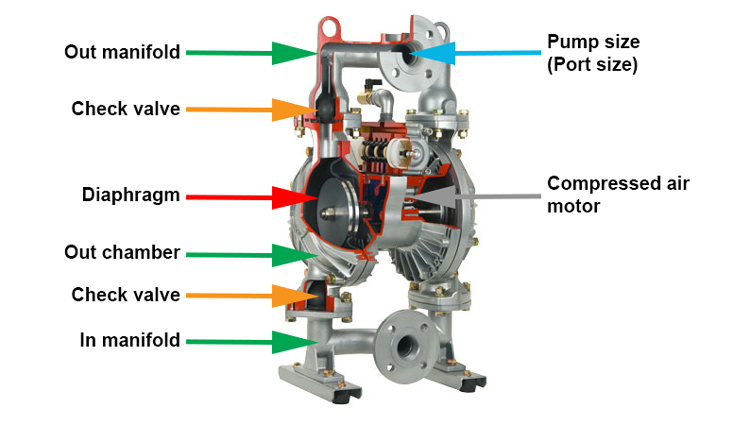
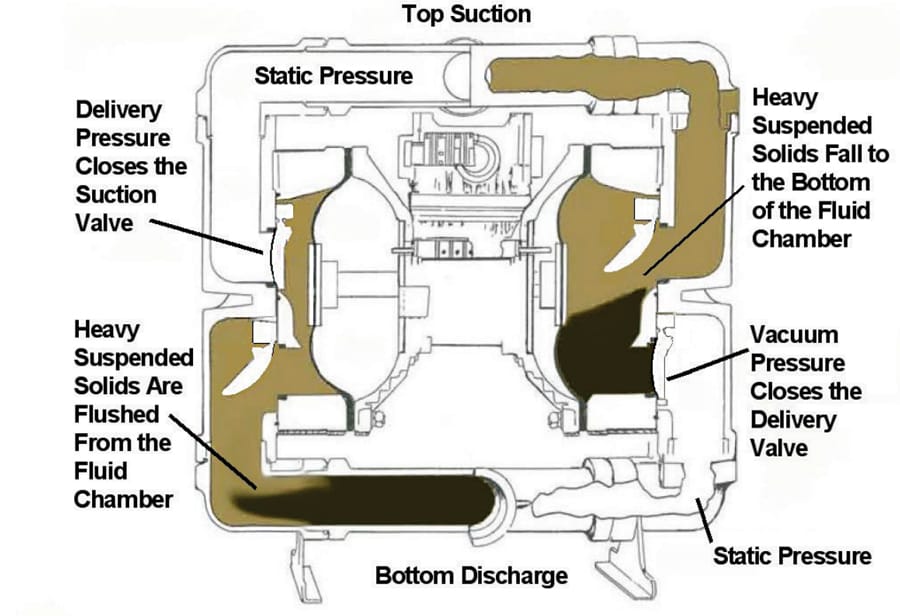
How AODD Pumps Work (Cutaway Diagrams)

Swipe through to see internal operation →

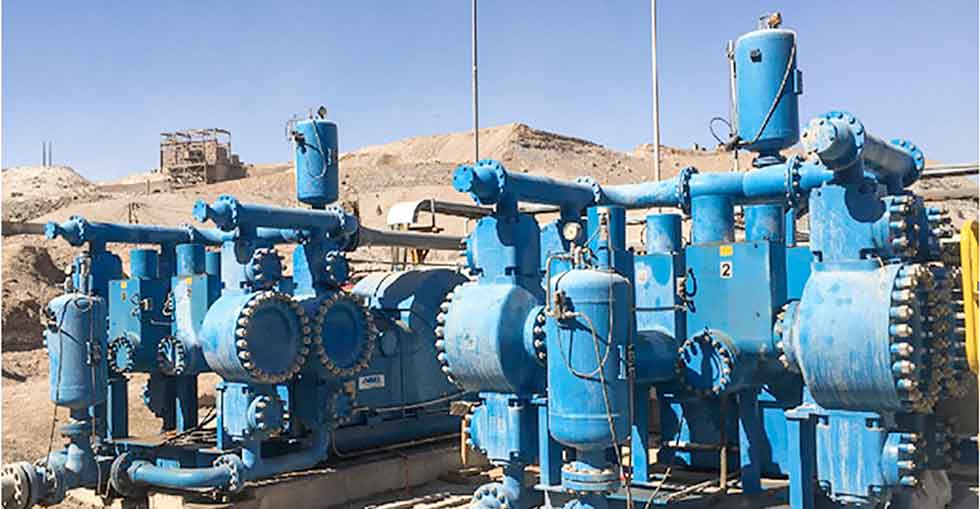
Real Industrial Diaphragm Pumps

Swipe for examples in action →

Typical Performance Curves

Swipe to see flow vs pressure examples (air pressure affects output) →

Typical Technical Specifications (AODD)

ParameterTypical Range
Flow Rate1 – 285 gpm (4 – 1,079 l/min)
PressureUp to 100–200 psi (7–14 bar)
Suction LiftUp to 25 ft (7.6 m)
Solids HandlingUp to 1/4" – several inches (model dependent)
Temperature-40°F to 350°F (-40°C to 177°C)
MaterialsAluminum, SS316, Polypropylene, PVDF
Download Full Datasheet (PDF)